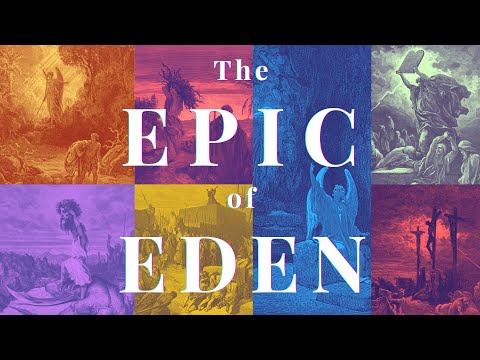
The Epic Of Eden - Nation Redeemed and Commissioned: The Exodus | March 16, 2025

Transcript
[Music] You're in the father's house. [Music] Prodigals come home. The helpless find hope. Love is on the move when the father's in the room. Prison doors flee wide. The dead come to life. Love is on the move when the father's in the room. Miracles take place. Cynical find faith. And love is breaking through. When the father's in the room, miracle walls are quaking. Strongholds now shaking. Love is breaking through when the father's in the room. I say love is breaking through when the father's in the room. Oo, Lay your burdens [Music] down here in the Father's house. Check your shame at the door cuz it ain't welcome [Music] anymore.
You're in the Father's house. Ooh. Lay your burdens down. Ooh. Here in the Father's house. Check your shame at the door cuz it ain't welcome anymore. You're in the Father's house. Good morning, Refuge Hill, or should I say top of the morning to you. Um, so we have a house church highlight this morning, but before I get to that, there's a few announcements. Uh, next Sunday after gathering, we have a finance update meeting. Um, it'll probably be like five or 10 minutes after the gathering to give parents a chance to grab their kids and come back down. and it shouldn't take too long. Um, speaking of finance, I just wanted to remind everyone, um, well, first, thank you to everyone who's contributed to the capital campaign.
Um, we're at 35,000 and, uh, we'd like to get to 50,000, uh, before the end of the month. Um, and just a reminder that um, the insurance is providing for most of what's happening to the building, but it's not covering the chairs, the locks, or the uh, room next to the kitchen that's getting um, kind of renovated or restructured. Um, so yeah, end of March, we'd love to get to that 50,000 mark. Um, and we're just really excited to get back into these parts of our building and spaces to honor God with them. So, um the last uh announcement would be the uh high school ministry is doing a high school retreat uh this Friday and Saturday.
Uh Friday the 21st from 6:00 to 9:00 p.m. and then Saturday from 10:00 a.m. to 6:00 p.m. And the majority of that will be held at this uh at the church. Um but there is a portion that's going to be at Wright State's uh rock climbing wall. And the theme of the event is recharge and just fostering an environment where um they can connect with Jesus. And so if you want to learn more about that, you can go to refugeill.urch um and click on events and then you can sign up there. Um or if you have any questions, you can reach out and ask Denny.
So, and so now for our house church highlight, I'll ask Sergio and Neilo to join me. Um, so the reason for our house church highlights except besides just celebrating what God's doing among us is my hope and prayer is that as we talk about these house churches, if you don't have the kind of community that's available through um a house church um that you would prayerfully consider um connecting and joining one. And so that's the whole hope and heart behind um kind of highlighting uh the different house churches that we have here at Refuge Hill. Um so Neilo, tell me about your house church. All right.
We are genuine Lo's community and uh we are a diverse um group. Um we have a lot of members that are all different ages. Um we have several young couples that have younger children. We have an older uh couple and uh and myself is single. And uh our desire is really just to be a diverse group of people. Um, and uh, our vision is to live in community, which is kind of why we have the genuine loves community. Um, kind of that, you know, you guys have heard of refrigerator rights. We want kind of to have those kind of rights in each other's lives where we're living life together.
We're spending time together. Um, and, uh, you know, really that's kind of been the vision that we've had in this church since the very beginning when we started house churches. Um, we had community groups before that. We were always living in community. Of course, we were all a lot younger then and uh not married and all that. So, it was a lot easier to spend a lot of time together. But, you know, as we grow in our different communities, the goal is still to be um so much part of each other's lives that we're encouraging each other to grow spiritually. We're um encouraging each other to reach out to the neighbors and stuff like that.
And uh so, yeah, that's is kind of the goal that we have. Awesome. Yeah, I love that. It takes intentionality, but when the support is needed, it's there, you know, and so to build that into each other to have that um genuine community. I love that. Um Sergio, how do you guys explore God together? Yeah. So, um typically we uh most most times we meet, we like to do like a version of like the Discovery Bible Method. Um where we'll read a small passage and then we'll kind of go around and talk about what stood out to us. Um, we'll also a lot of times kind of do check-ins and kind of talk about our weeks and kind of give highs and lows.
And then we'll also spend some time in prayer, you know, different prayer requests and things like that. Um, I really enjoy the format because it's kind of laid-back. Um, but also gives us an opportunity to kind of point to each other's lives and encourage one another. You know, sometimes there might be certain issues or things that people are dealing with and we can kind of, you know, give like biblical advice and, you know, just words of encouragement and things like that. Yeah, love that. Um, so one of my favorite questions is and I was gonna ask Sergio, um, what has House Church meant to you and how has it made a difference in your life?
So for me, the one thing I appreciate about House Church, it kind of ties into like what our vision is is just that, you know, we have just people in different walks of life. So we have parents with young kids, we have single, we have people who are empty nesters. And for me personally, I appreciate um me having young kids as well, being able to talk to other parents and get their perspective. But I also really appreciate talking to people who are single, people who are empty nesters because it, you know, I I really enjoy their perspective as well. Sometimes you can kind of become kind of narrow-minded, if you will, I guess, if you're only like or echo chamber if you're only talking to just parents and, you know, the same walk of life as you.
But it's kind of good to have that perspective and wisdom for people who've gone through it, but also people who maybe haven't, but they have a, you know, a different take on things. So, I just really appreciate that. And I also think that it's a reflection of the greater body of Christ, um, and how we should be. So, that's kind of like Neo said, that's kind of like our vision that we want to just keep growing, you know, be a multicultural, multigenerational, uh, type of house church. I forgot to ask, when do you guys meet? Um we meet on uh the first and third Sunday of the month and uh we meet at 4:30 and uh we go for about a couple hours and uh yeah so if you want to uh be involved in people who want to get involved in each other's lives, want to do things outside uh of just the the house church meeting, you know, we had uh we have one young guy um he's got little kids and uh his job is more at night.
So during the day, he'll take him to the park or do this or that and he'll contact other people and be like, "Hey, we're going here. Come join us." And so just kind of, you know, that idea of um you're living life together. You're joining each other in h what you're doing. You're not not being isolated. You're um just really, you know, whether it's helping each other do something at the house or go hang out at the park or um grabbing dinner like, "Hey, have you had dinner yet?" "No, I haven't. Let's get let's let's cook a meal together or something. You know, those kind of things are kind of the vision.
Very cool. So, yeah, if you guys want to learn more about Genuine Loves Community or any of our house churches, you can go to refugeill.urch, scroll to the bottom, and click join a group and you'll see them all listed there. So, let me pray for Genuine Loves. God, thank you for Sergio and them sharing the vision of their house church and how it plays out in their lives. and thank you for their commitment to you and their commitment to one another. And just pray that they that through that um you would be lifted up um and that your truth will be spread uh throughout their uh circles of influence.
Uh thank you God and I pray this in Jesus name. Amen. All right. So as you say hello to the people around you, uh the March Madness basketball tournament starts in a couple days. Um so you can ask do you fill out a bracket and how does that usually work out for you? I was right there. Incredible. All right, let's stand together and sing again. Well, I've been turned around, but never been lost. When my knees were shaking, you held my hand, turning my problems to a promised land. The long good shepherd I'll follow on my days. There ain't nothing sweeter than what you make way.
You walk me through the valley, but you never steer me wrong. So lead on, good shepherd, lead on. See some mighty deep cans that you brought me through. See some mighty big mountains that just up and move. Glory, glory, hallelujah. [Music] Yeah, that's my song. Walking with my father into the great unknown. Lead on, good shepherd. I'll follow all my days. There ain't nothing sweeter than what you make way. You walk me through the valley, but you never steer me wrong. So lead on, good shepherd, lead on. Step by step, day by day, lead me on, Lord, I pray. Road gets dark. Walk by faith.
Lead on good shepherd. Step by step, day by day. Lead me on Lord I pray. Road gets dark. Walk by faith. Lead on good shepherd. Lead on good shepherd. I follow on my days. There ain't nothing sweeter than what you make way. You've walked me through the valley, but you never steered me wrong. So lead on, good shepherd, lead on. Step by step, day by day. Lead me on, Lord I pray. Road gets dark, walk by faith. Lead on, good shepherd. Step by step, day by day, lead me on, Lord I pray. Road gets knocked, walk by faith. Lead on, good shepherd. Lead on, good shepherd.
Lead on, good shepherd. Lead on. Good shepherd. Lead on. Good shepherd. Lead on. Good shepherd. Lead on. Bring it all [Music] toace at your call. Still raging me still every Jesus. Jesus you make the darkness tremble. Jesus Jesus silence fear. Jesus Jesus you make the darkness tremble. Jesus. [Music] Jesus. Call these bones to live. Call these lungs to sing once again. I will praise Jesus. Jesus. You make the darkness tremble. Jesus. Jesus. Silence fear. Jesus. Jesus. You make the darkness tremble. Jesus. Jesus. Jesus. Jesus. You make the darkness tremble. Jesus. Jesus. The silence feel Jesus Jesus you make the darkness tremble. Jesus Jesus your name is a light that the shadows cast.
Your name will not be overcome. Your name is a light forever lifting high. Your name will not be [Music] overcome. Jesus, Jesus, you make the darkness treadful. Jesus, Jesus, the silent spirit. Oh Jesus, Jesus, you make the darkness tremble. Oh Jesus, Jesus. [Music] Your name is a light that the shadows can't deny. Your name will not be overcome. Your name is life forever lifted high. Your name will not be over. Your name is a light that the shadows can't deny. Your name will not be overcome. Your name is alive forever lifting high. Your name will not be overcome. Jesus. Jesus. You make the darkness tremble.
Jesus, Jesus, you silence fear. Oh Jesus, Jesus, you make the darkness tremble. Jesus, Jesus. [Music] [Music] You give life. You are love. You bring light to the darkness. You give hope. You restore Every heart that is [Music] broken, great are you, Lord. It's your breath in our lungs. So we pour out our praise. We pour out our praise. It's your breath in our lungs. So we pour out our praise to [Music] you. You give light. You are love. You bring light to the darkness. You give hope. You restore every heart that is [Music] broken. Great are you, Lord. It's your breath in our lungs. So we pour out our praise.
We pour out our praise. It's your breath in our rocks. So we pour out our praise to you holy. It's your breath in our lungs. So we pour out our praise. We pour out our praise. It's your breath in our mouths. So we pour out our praise to you only. [Music] All the earth will shout your praise. Our hearts will cry. These bones will sing. Bring are you Lord. All the earth will shout your praise. Our hearts will cry. These bones will sing. Great are you, Lord. All the earth will shout your praise. Our hearts will cry. These bones will sing. Great are you, [Music] Lord.
It's your breath in our lives, so we pour out our praise. We pour out our praise. It's your breath in our lungs. So we pour out our praise to you, oh it's your breath in our lungs, so we pour out our praise. We pour out our praise. It's your breath in our lungs. So we pour out our praise here. [Music] Holy Father, thank you so much Lord for this day. Father, thank you for bringing us here. What a brilliant and wonderful plan you have Lord to bring us here to worship you father just to glorify your name. Lord be with Chad as he brings your message to us today and we'll give you all the praise and worship in Jesus name.
When he was a missionary in India, the scholar Leslie Nubigan had a conversation with a Hindu scholar who made a comment. He said, "I can't understand why you missionaries present the Bible to us in India as a book of religion. It is not a book of religion. And anyway, we have plenty of books of religion in India we don't need anymore." I find in your Bible a unique interpretation of universal history, the history of the creation and the history of the human race and therefore a unique interpretation of the human person as a responsible actor in history. That is unique. There is nothing else in the whole religious literature of the world to put alongside it.
It's one thing for a Christian to say that the Bible is unique, but here's someone not a Christian who says the Bible is unique. It's not just these ethereal philosophies or ideas or ways to live your life, but this Bible is a story of the creator God interacting with his creation and interacting with the people that he has made. And that's different. And so as we've continued through this series, the Epic of Eden, talking about the big overarching story of the Bible, one of our goals has been to see how the big story of the Bible connects with our individual life stories. And we want to continue to do so uh today.
And uh so for the sake of review, we've uh we've adopted a bit of an acronym, a bit of a framework to help us remember the story of the Bible. And it's an acronym kingdom. K I N G D O M. And so, uh, for the sake of muscle memory, I would like for us all to, uh, do it again. Uh, but I'm not going to say the letter. We're just going to read it all straight through together. So, we have kickoff and rebellion, instrument of blessing, nation redeemed and commissioned, government in the promised land, dispersion and return, overlap of the ages, and mission accomplished.
Yeah, that is in a nutshell the story of the Bible. And each of these uh statements represent an era of what God was doing advancing the story to where he was taking it. Last week we heard from our friend James Whitman who did a great job uh covering I the instrument of blessing talking about uh Abraham and how in Genesis 12 God says to Abraham through you all the families of the earth will be blessed. how this worldwide blessing was going to happen through Abraham and through his family. Um, now when you think of the context of the story we've been in so far, it seems as if Genesis 12 with the blessing of Abraham is God's response to the fall in Genesis chapter 3 in order to get us back to the shalom of Genesis chapter 1 and two.
And so this redemptive story that launches with the story of Abraham, uh the rest of the Bible is basically the unfolding of how that plan is going to play out. And so today we will continue um going through with the letter Nation redeemed and commissioned. Uh but for review, you know, James reminded us that uh Abraham was the father of Isaac. Isaac was the father of Jacob. Uh, Jacob was the father of 12 sons who would eventually go and become the 12 tribes of Israel. But the story focuses in on one son named Joseph. And uh, if you need a refresher on the story of Joseph, I did a um I did a sermon back in December called the God who is there.
And you can check out our YouTube page if you need a refresher on that. But I'm not don't have time to go through all of that. But as in a nutshell, the story of Joseph is that his jealous brothers betray him and sell him as a slave. He ends up in Egypt. Long story short, he ends up in power in Egypt. And in Egypt through Joseph has this wise plan to help Egypt get through this coming drought and famine. And so when there's this drought and famine throughout the land, Joseph's brothers go to Egypt, not knowing that he is in power there, but they reconcile there and they're able to survive.
So now Israel lives in Egypt. That's how they got there. Now with that as the backdrop we move forward with nation redeemed and commissioned with the story of the exodus. Now to summarize the book of Exodus uh the book of Exodus in a sense traces the the themes or the storyline of many stories that have been told throughout history. a lot of the stories that we grow up loving um which basically is that a a hero rescues his beloved usually by fighting some sort of beast and once he rescues his beloved he marries her and they live happily ever after right that's kind of a familiar pattern isn't it I mean and this goes back like ancient Greece Perseus rescues Andromeda from a sea monster and then he marries her or the 11th century there's a story of St.
George who rescues a princess from a dragon and then he goes on and marries her and even many you know modern stories I don't know something like Shrek sort of right it kind of sort of like hints at that as a pattern doesn't it but uh Exodus in a sense goes this way God rescues Israel God then marries Israel and then God moves in with Israel and then We'll kind of take a look at whether or not they live happily ever after. So that's kind of our pattern for today. So first, God rescues Israel. And so with that, we'll go to uh Exodus uh chapter 1, starting in verse 6.
Now Joseph and all his brothers and all that generation died. But the Israelites were exceedingly fruitful. They multiplied greatly, increased in numbers. That language should sound familiar. And became so numerous that the land was filled with them. But then a new king to whom Joseph meant nothing came to power in Egypt. Look, he said to his people, "The Israelites have become far too numerous for us. come. We must deal shrewdely with them or they will become even more numerous and if war breaks out will join our enemies and fight against us and leave the country. So they put slave masters over them to oppress them with forced labor and they built Pitham and Ramsies as store cities for Pharaoh.
But the more they were oppressed the more they multiplied and spread. So the Egyptians came to dread the Israelites and worked them ruthlessly. And they made their lives bitter with harsh labor and brick and mortar and with all kinds of work in the fields. In all their harsh labor, the Egyptians worked them ruthlessly. Then verse 22, then Pharaoh gave this order to all his people. Every Hebrew boy that is born, you must throw into the Nile. But let every girl live. Pretty familiar to a lot of us. But let's consider this. Let's think back to the original vocation of humanity in Genesis chapter 1. If you remember, fill the earth and subdue it.
Right? Does that sound familiar? Fill the earth and subdue it. But then we see how as a result of the fall, the consequences in Genesis chapter 3 are that rather than subduing the earth, the earth is now cursed. Cursed is the ground because of you. Thorns and thistles it will produce for you. And now you will have to work the land and painful toil you will eat of your bread. So to subdue the earth is now going to be very, very hard. and filling the earth, having children. Well, now that's going to be difficult because all aspects of bringing children into this world are going to be now much more painful.
But now, let's jump forward to Exodus chapter 1. And what do we see? We see painful toil. Toil is painful for all of humanity in order to eat. Now being oppressed into slave labor, that's kind of like insult to injury. That's like next level difficulty. What else does Pharaoh do? Tries to control the population. So with the mandate of filling the earth and subduing it, that's much harder now in Egypt being under painful the painful toil of slavery. And when some tyrant is trying to control your population by killing your boys, it's going to be hard to fill the earth like that. So, Exodus 1 is this extra weight on top of what we already have in Genesis chapter 3.
But notice also this. Pharaoh says, "Let us deal shrewdly with the Israelites." What's a synonym for shrewdly? Crafty sounds like the one, doesn't it? Crafty is a bit of a synonym for shrewdly. Have we read about a crafty being in the Bible story so far? The serpent. And maybe you've seen some of the old pictures of the masks or the the the depictions of the pharaohs. And what do they usually have right here at the top of their crowd? Some kind of snake, right? Pharaoh is now this serpentine type creature oppressing the humans. Now, in order for God to rescue his the Israelites, he's going to have to crush a serpent.
And so, we move to Genesis, sorry, Exodus chapter 2, where a woman gives birth to a son and she can't bear to toss him into the Nile as Pharaoh commanded. So she keeps him hidden for some three months, which I would argue is one of the greatest miracles in the Bible, right? Because babies make noise and lots of noise. To keep a baby hidden is really, really difficult. Uh but after three months, uh she realizes she can't keep him hidden for long. So she puts him in the Nile but safely. She puts him in a basket, floating him down the river in hopes that someone would have compassion on him.
Now, here's something interesting. The word used basket in Exodus chapter 2 is the same word used for Noah's ark. So just as Noah was spared from the waters of judgment through the ark, so now this baby was spared through this little ark in the Nile River. Well, he lands along the bank al among the reeds where who should find him but Pharaoh's own daughter. And Pharaoh's daughter has compassion on him and adopts him as her own and names him Moses for I drew him out of the water. So Moses would spend the first 40 years of his life as a prince of Egypt. That sounds like a great movie title.
But Moses's life, you're too kind with that one. That one didn't deserve that one didn't deserve that kind of response. Moses lives in total for 120 years, but his life is kind of neatly segmented into thirds. 40 years as a prince of Egypt, but when he's 40, he sees one of his fellow Hebrews being abused by a slave master. So, he rises up to defend him and ends up killing the slave master. And when this thing became known, Moses had to flee. He exiled himself. And so, Moses then becomes a pariah. A pariah, an outcast. He goes to the land of Midian where he would be a shepherd for another 40 years.
So first 40 years as a prince, ages 40 to 80 as a pariah. And just when you think at age 80 he's about to retire from life. He then becomes a prophet. He has this encounter with God through the burning bush where God reveals his name as Yahweh. So, Prince Pariah, Prophet, eventually Moses goes to Pharaoh to say what God says to let my people go. Well, we quickly learn that this is going to take more than just asking nicely. Pharaoh is not intimidated by a God of slaves. Who is this Yahweh? If his people are enslaved, h how great is this Yahweh? No, no, no, no, no.
You people, you people have too big of an imagination. Clearly, you have too much time on your hands. So, he makes their work all the more difficult. And so, the Israelites say to Moses, "Thanks a lot. Big help you are." But we learn again, this is going to be more than just asking nicely. So, God begins his process of redeeming and rescuing Israel through the plagues. So, we have plagues like the Nile turning into blood, uh, flies and frogs and gnats and livestock dying and hail and darkness and all these different kind of plagues. And we learned eventually through the scriptures that each of these plagues was a symbol of a judgment against the gods of Egypt.
So imagine being an Egyptian and seeing the Nile turn to blood like oh no some the gods the god of these Israelites are beating our gods of the Nile into a bloody pulp. And it's dark. Where is the son god Aman Rah? It seems that is as if Yahweh has him in a headlock. And so we have this darkness. But each time they feel the pain of these plagues. Pharaoh goes to Moses and says, "Okay, okay, okay. I give. Have your God relent of this and then I'll let your people go." Once the plague relents, Pharaoh says, "Never mind." Psyche. until the final plague which was against of the final god of Egypt, Pharaoh himself.
The final plague was a judgment against Pharaoh himself, who the people of Egypt revered as a god. And that of course was the death of the firstborn throughout Egypt, which of course was a response to Pharaoh having the the Hebrew sons tossed into the Nile. Pharaoh's own evil was turning back to him. But of course, Israel was spared from this by taking the blood of a lamb and painting it on their doorpost so that death would pass over while they were eating this meal comprised of unleavened bread. Unleavened because there was no time to let it rise because this very night you will be exiting the land of Egypt.
So Pharaoh sees all this and he says, "Get out." So Israel goes and as they go, the Egyptians are giving them gold. They're like, "Take this and don't come back. We're done with these plagues. Here's money for the road." And I don't know exactly at what point Pharaoh began to have a change of heart. Maybe it was when there was no one to cook him breakfast the next day. What have we done? What have we done? We let our slaves go. This is going to take our economy. So he sends his chariots to go and pursue the Israelites. And so there on one side is the Pharaoh's chariots coming.
They can't outrun them because before them is the sea. What are we going to do now? The Israelites say to Moses, "Was it not because there weren't graves in Egypt that you had to bring us out here to the wilderness to die?" Moses says, "Be quiet and watch this." So what happens is that this pillar of cloud that had been leading the Israelites out, leading them to the promised land that they were eventually going to go to, the cloud rested between them and the chariots to kind of block the way kind of forming a barrier between them and the Israelites. But then what happens is that an east wind blows and divides the sea.
So that you have these walls of water with dry ground in the middle, wind In the east, wind blows. Remember the word for wind? Ruah. We've heard we've heard that word before through the story of the Bible. Genesis 1, and the spirit of God, the ruah of God hovering over the waters and then dry ground appears. Then in Genesis 9, the wind comes over the floodwaters. After the flood, the ruach, the wind, and then dry ground appears. Here once again the ruach an east wind comes and creates dry ground in between these two waters of walls here at the Red Sea or more literally the sea of reeds.
And just as Moses was drawn from the reeds of the Nile, here too he would be delivered from the sea of reeds as he and the people walk on dry ground from one side of the sea to the other. Well, the wheels of the chariots of Pharaoh are stuck in the mud for a while and then the walls of water collapse onto them once again. Just as Pharaoh had drowned the sons of Israel in the Nile, his own evil was turned back onto him as the waters of judgment came and drowned the sons of Egypt. So, Israel celebrates. They sing to the Lord. The Lord is a warrior.
The Lord is his name. He fights for us. And then we see this uh this purpose God they they he leads them to a mountain called Cyani where he tells them you yourselves have seen what I did in to Egypt and how I carried you on eagle's wings and brought you to myself. Now, if you obey me fully and keep my covenant, then out of all nations, you will be my treasured possession, although the whole earth is mine. And you will be for me a kingdom of priests and a holy nation, a kingdom of priests, just as Adam and Eve had royal status as the living, breathing statues of God, representing his rule, also having a priestly role of working and keeping the garden.
They were to reflect God and represent God to creation. Now, in the same way, Israel is a kingdom of priest who represents and reflects God to the nations. This is what being in covenant with Yahweh looks like. That the nations may also come to Yahweh. Exodus 20, they get the ten commandments and other laws. But these ten commandments giving big ideas of how to relate to God as well as how to relate to others. So God rescues Israel. That brings us to the next part of the story. God marries Israel. And if you think I'm stretching the metaphor a bit much, well, this is a metaphor that God himself uses.
Jeremiah 31, I brought them out of Egypt and I was a husband to them. And here we have in Exodus 24 a bit of a ceremony that makes this covenant official. Exodus 24:3. When Moses went and told the people all the Lord's words and laws, they responded with one voice, "Everything the Lord has said, we will do." If you know the story, you know that's either ironic or tragic. One of the two, maybe both. Then Moses wrote down everything the Lord had said. Then Moses has some bulls sacrificed. He takes some of the blood and uh sprinkles it on an altar. Verse seven says, "Then he took the book of the covenant and read it to the people.
They responded, "We will do everything the Lord has said. We will obey." Moses then took the blood and sprinkled it on the people and said, "This is the blood of the covenant that the Lord has made with you in accordance with all these words." In other words, Israel says, "I do." And when it comes to, "You may now kiss the bride," they get blood sprinkled on them. Now, whatever this blood is meant to represent, clearly the implications are this covenant making is serious business. So God marries Israel. They are now his people. So God rescues Israel. He marries Israel. Then God moves in with Israel.
In Exodus 24, right after this, Moses goes back up the mountains and where he uh starts to receive blueprints of the house that God was to live in. This kind of tent that they would call the tabernacle. The tabernacle would be kind of a portable temple, a a tent that represented sacred space where God was to receive worship. And uh I I mentioned this before, but a lot of the furnishings and the symbolism within the tabernacle was meant to make our minds think of the garden. It was a little scale mo model of the garden again life with God uh once again. And so by the end of the book in Exodus 40, it says, "Then the cloud covered the tent of meeting and the glory of the Lord filled the tabernacle." God moves in.
In the next book of the Bible, in Leviticus in chapter 26:12, God says, "I will walk among you and be your God, and you will be my people." Let's pause here real quick and do some theological reflection. At the beginning of this series, I said that the ideal, God's goal in the story of the Bible are um with with four Ps, right? Does anyone remember them? Presence, place, people, and purpose. To summarize the story of the Bible with four Ps, we have the story of the Bible is about God's presence in an appointed place among his people working together for his purposes. Let's do a quick checklist, shall we?
Because again, we have this in the garden. God is present in the garden. He's with the people he created. They have a purpose of filling and subduing the earth, representing God and all that. Let's do that checklist here with what we just read in Exodus. Do we have God's presence? Yeah, God's presence in the tabernacle. The cloud filled it up. He says, "I will walk among you." Do we have an appointed place? Sort of. Yeah. In one sense with the tabernacle, but they are going, they are headed to the land that God had promised to them. So, we're getting to that appointed place. Do we have God's people?
Yeah. He made a covenant with them. He marries them. He says to them, "You will be my people. I will be your God." And do we have a purpose? Do the people have a purpose? You will be for me a kingdom of priests representing me to the nations. So just as again as Adam and Eve were to reflect God to creation, Israel now was to reflect God to the nations. So we have like all of these things once again, but the question is, are we back in the garden yet? You know, with the with the framework of this story, God rescuing Israel, marrying Israel, and moving in, do we have happily ever after?
Not quite. Not quite. Because as Moses is on the mountains, Mount Si receiving the blueprint for the tabernacle, what is Israel doing at the foot of the mountain, not keeping the covenant, they collect gold from the jewelry of the people, the earrings, the the bracelets. They melt the gold down and they make a golden calf and they say, "Behold the gods who have brought you out of Egypt." Now they had heard the words of the covenant and they had heard the ten commandments. The top two have no other gods before me and don't make images. Strike one. Strike two. Here they are at the bottom of the mountain.
Remember this ceremony. This was God marrying Israel and Israel being unfaithful to God. Imagine being on your honeymoon and you wake up one morning and your spouse is not in the bed next to you. So, you go out onto the balcony of the hotel and you look down poolside and your spouse is flirtatiously putting sunscreen on somebody who is not you. And as they walk away, this person gives your spouse a key to their hotel room with a wink. Here, we're starting to get a glimpse a little bit of what this was like for the people to do this as they make a covenant with God.
In fact, God describes this. God describes the idolatry of Israel throughout the Old Testament as adultery. This is spiritual adultery. So, no, we don't quite yet have happily ever after. So, Moses comes down from the mountain. He breaks the tablets where the the covenant was written because the people have broken the covenant. And what he does, Moses took the calf that the people had made and burned it with fire. And he ground it into powder, scattered it on the water, and made the Israelites drink it because sin is bitter. However, although the Lord had every right to destroy these people and start all over again, Moses intercedes and we find out this refrain that we read throughout the Old Testament that the Lord is gracious and compassionate, slow to anger and abounding in steadfast love.
And that's good news that keeps us alive today. So the people eventually after a year leave Mount Si to start heading to their promised land. It takes quite a bit of time to organize two and a half million people I suppose. But the book of Numbers, the traditional name for the book of Numbers is in the wilderness. And they're heading there. And really, the distance between Mount Si and the promised land really is only about a two-eek trip. And so we think like, okay, any day now we should be reading about the people in the promised land and this project getting back on track. Right.
Right. any day now. Well, two weeks is a bit extended, but we'll we'll we'll do some um vignettes of what happens to the book of Numbers. In Numbers 11, we read this. The rabbi with them began to crave other food. And again, the Israelites started wailing and said, "If only we had meat to eat. We remember the fish we ate in Egypt at no cost. also the cucumbers, the melons, the leaks, onions, and garlic. And now we have lost all our appetite. We never see anything but this mana, this this bread that God was dropping out of heaven. And so in verse 18, God says this, "Tell the people, consecrate yourselves in preparation for tomorrow when you will eat meat.
The Lord heard you when you wailed. If only we had meat to eat. We were better off in Egypt. Now the Lord will give you meat and you will eat it. And you will eat it not just for one day or two or five or 10 or 20 but for a whole month until it comes out of your nostrils and you loathe it because you have rejected the Lord who is among you and have wailed before him saying, "Why did we ever leave Egypt? We'll make more comments on this story in a moment, but we have to move forward in order to give context to to make sense out of the story.
Israel then sends 12 spies on a recon mission to check out the land that God was leading them to. And out of the 12 spies, two of them, Joshua and Caleb, come back and saying, "Yeah, it's a good land. We can take it. It'll be great." 10 of them says, I don't know. There's giants there. We'll be crushed. We'll be swallowed up by the land. I don't think this is such a good idea. So, in Numbers 14:1, that night all the members of the community raised their voices and wept aloud. All the Israelites grumbled against Moses and Aaron. And the whole assembly said to them, "If only we had died in Egypt or in this wilderness, why is the Lord bringing us to this land only to let us fail, only to let us fall by the sword?
Our wives and children will be taken as plunder. Wouldn't it be better for us just to go back to Egypt?" And they said to each other, "We should choose a leader and go back to Egypt. Now, here is where the rubber meets the road. Here is where we can connect our stories to the story of the Bible. Because what we have here is a case of the slave is out of Egypt, but Egypt is not yet out of the slave. Even though politically and economically they are no longer enslaved, mentally and spiritually they are still enslaved. They somehow still feel tethered to Egypt for some reason.
Whenever things go wrong, let's just go back to what's familiar. And the Bible describes the human condition left to ourselves as slavery to sin. And there are a number of ways in which sin resembles addiction because when it comes to you know addiction and sin it may be that there's a time where you are distressed times where you are sad or disappointed or depressed and you are looking to some agent to make you temporarily feel better. something that promises you something but often doesn't deliver. But what happens along with sin and addiction is that there's this sense of denial. There's a sense of denial like ah I could quit whenever I want.
But it also causes you to misremember or to recolor the past or practice some revisionist history. Check out Israel. If only we had meat to eat. Oh man, we had it made in Egypt. We had cucumbers. We had melons. We had leaks. We had garlic. We had fish for free. All the free fish you could want. But notice what they omitted. They omitted the backbreaking labor. They omitted the whips of their masters. They omitted the murder of their children. But other than that, it didn't cost anything. But they also hear as they talk about, "We're going to die out here. The Lord has led us out here to fail." They also failed to remember what he had done for them, leading them out of slavery of the from the strongest nation in the world, parting the sea.
bringing bread from heaven, forgiving them when they had clearly cheated on him. Like time and time again, the Lord showing his faithfulness to them. But here they are. No, no, no. He brought us out here to let us down. It's denial. It's it's misremembering. And then there's this thing with willpower. Sin and addiction have this thing of weakening your willpower and leading you to this cycle. Uh this cycle again where you feel stressed out or or sad or scared and you try to temporarily cope with that by using a substance or a behavior that will in your mind will temporarily help you out. We deal with our distress with the very thing that distresses us.
And so we're stressed out. We're we're disappointed. We're depressed. We're scared. We try to cope with something we shouldn't do. And then that leads us to feel guilty and ashamed, which again makes us stressed out, depressed, and scared. How did we cope with that before? Oh yes, let's run the cycle back again. So an example is I'm happy. I'm unhappy. So I'm going to cope with my unhappiness by overeating. And while overeating was fun at the time, now that I have overeaten, I'm unhappy again. And the cycle continues. We use the very thing that has put us in distress to deal with our distress. Israel was the Egyptians in chapter one made life bitter for Israel and now all they can think to do is to go back to it.
That's called slavery. And one thing that it seems that Israel was enslaved to was the phrase, "If only." If only we had meat. If only we had died in Egypt. The subtext is, "If only we were back in Egypt. If only. If only." We too are often enslaved to if only, aren't we? I mean if only is a way that we tell ourselves that like hey if only this happened or if only this circumstance were reality then I would be happy then my life would have meaning then I would be all set. So we say if only I would get that promotion at work. If only I could lose 20 pounds.
If only I made another 10 to 15 grand more. If only my spouse showed more initiative. If only my spouse were a little bit more attractive. If only my kid would get this scholarship. If only these people were in political power. If only someone would love me. If only, if only, if only. The truth of the matter is Israel said, "If only we had meat to eat." Well, guess what? Eventually, they got meat. Did that solve everything for them? We always say the grass is greener over there, don't we? Here's the thing. If the if only of your life actually comes true, guess what? You're not all set.
You'll only pursue the next 10 ifies, you will be so stuffed full of with only that it'll come out of your nostrils. to use the language of numbers 11 that if only is not the solution to all your problems. Paul talks describes slavery in Romans chapter 7. For I know that nothing good dwells in me that is in my flesh. For I have the desire to do what is right, but not the ability to carry it out. For I do not do the good I want, but the evil I do not want is what I keep on doing. That sounds like slavery. Wretched man that I am, who would deliver me from this body of death?
Paul's saying, if only there was someone to break this cycle for me. He gives the answer in 25. Thanks be to God through Jesus Christ our Lord. Amen. You see with all of these if only that is essentially revealing to us the picture of paradise that we have because the reality underneath all of these with ifonies is really the longing for the garden is the longing to be back with God. We may not recognize what what it is but that's what it is. A writer named Bruce Marshall writes in a novel, the young man who rings the bell at the brothel is unconsciously looking for God.
Everything you're looking for in that promotion, everything you're looking for with a little bit extra money and all these all these things that you say, "If only this would happen," that's your definition of paradise. And by them, you can learn your greatest desire and your greatest fear. If only, if only. Jesus is the to all of our ifies. He's the ultimate if only. If only we could get back to the garden. He's the way. He is the way. He is the Passover lamb. And by his blood, we find our freedom from slavery. And so what God does as he gives these laws to Israel is that he establishes these festivals to help them remember.
Because what Israel deals with is the same thing that we deal with. And that is something called spiritual amnesia, right? To misremember how miserable sin makes us and to forget the goodness that God has for us. These people missed out on what God had for them. You don't want to go to the land? Fine. I'll give it to your kids. That's why a twoe trip turned into 40 years. If we're so obsessed with our ifonies, we can miss out on what God has for us. But God establishes these festivals of remembrance to remember the bitterness of slavery, but to remember God's faithfulness and what he had done for them.
What are your rhythms of remembrance? How is it that you remember what God has done for you? And so, as the band comes and as the communion team comes, we are going to practice one of the rhythms that God gave to us as Christians. as Jesus took the a Passover meal and gave it new meaning because the Passover was something Israel was to remember. They were to celebrate to remember their slavery in Egypt and how God brought them out. But now Jesus takes that Passover and turns it into communion, the Lord's supper. And so he takes bread and this bread is Passover bread. made this way for thousands of years.
Many have commented that this bread has burn marks on it. It's got lines in it and it also has holes in it. In other words, it is bruised. It is striped and it is pierced. Does that sound familiar? And Jesus takes the cup and says, "This cup is the new covenant in my blood." The first covenant was sprinkled on the people. The new covenant, it's taken in you in order to take everything that Jesus has to offer and let it change you from the inside out. So today, as we take this communion, let us remember, let us remember that what we're ultimately looking for is paradise, a way back to the garden, and a way back to God.
And all of our ifonies offer an illusion of that. Jesus offers the real thing. So we're not just mentally remembering the story today. In a sense, we're reenacting it as we take the bread and take the cup into ourselves. So at your own initiative, as the band plays, you come come up the left side of the section that you are in. Go back down the right side. You'll be given piece of bread. This is you'll be told, remember the body of Christ broken for you. You'll dip it into the cup where you'll be told remember the blood of Christ shed for you. And as we take it into ourselves, we can remember that he has offered us much more than we could ever dream for ourselves because he has set us free.
our father. This is not just a story about slaves some more than 3,000 years ago. This is our story. We've all been enslaved to things that would destroy us and we can't help but go back to them. God, let the chains, let the grip that Egypt has on our hearts be loosened today as we remember that you have come. Thanks be to God through Jesus Christ our Lord. That you are our Passover lamb that has led to our freedom. Freedom from all of our ifonies. So keep let us keep that truth as a matter of remembrance. Help us that whenever we are depressed, whenever we are grumpy, whenever we are scared and anxious, help us to ask ourselves, what is the if only that I am relying on right now that is leading to these negative emotions?
And how do I need to remember that it is an illusion to think that these things will solve my biggest problems, but you are the solution. So let us taste that today, Lord. May today be marked by freedom. It's in Jesus name we ask these things. Amen. That's your own initiative as the band plays. Come and receive the [Music] word high in gloration. [Music] Christ. What a beautiful name it is. What a beautiful name it is. The name of Jesus Christ my king. What a beautiful name it is. Nothing compares to this. What a beautiful name it is. It's the name of Jesus. You didn't want heaven without us.
So Jesus, you brought heaven down. My sin was great. Your love is greater. I could separate us. What a wonderful name it is. What a wonderful name it is. The name of Jesus Christ my king. What a wonderful name it is. Nothing compares to this. What a wonderful name it is, the name of Jesus. What a wonderful name it is, the name of Jesus. [Music] to the silence of sin and brave. The heavens are roaring. The praise of your glory for you are raised to life again. You have no right. You have no equal now and forever. God, you reign. Yours is the kingom. Yours is the glory.
Yours is the name above all. What a powerful name it is. What a powerful name it is. The name of Jesus Christ my king. What a powerful name it is. Nothing can stand against. What a powerful name it is. The name of Jesus. You have no right. You have no equal. Now and forever. God you made. Yours is the kingom. Yours is the glory. Yours is the name above all. What about the name it is? What about the name it is? The name of Jesus Christ. [Music] What a powerful name it is that we can stand against. What a powerful name it is. The name of Jesus.
What a powerful name it is. The name of Jesus. What a powerful name it is. The name of Jesus. [Music] Hello. Uh hello. Um this announcement is just for the ladies. Uh the women's ministry team would love to hear from you. What are your interests? What are you looking for? women's ministry. Uh so we've created a survey we would really love for all of you to take. Uh the QR code there will take you straight to the survey or you can get on the website under um resources and it'll be there. Um ideally we would like for everyone to have this taken in the next few weeks.
So then at the end of spring here we'll be able to announce our future plans. Um so be on the lookout for that date as well. If technology is not your thing, we still would love to hear from you. So, if you want to come see me after the next few services, I would love to help you there as well. Speaking of after the services, the worship team needs this room. So, if you could take your fellowship on out uh to the cafe, we would really, really appreciate that. Uh so, with that, go be uh be blessed and be a blessing to others.