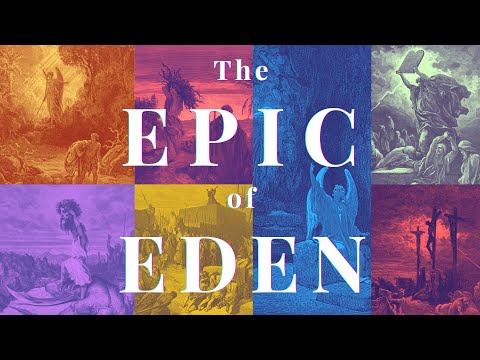
The Epic Of Eden - Government In The Promised Land

Transcript
Good morning everyone. So, we're continuing the Epic of Eden this morning and you know the drill. We're using uh an acronym if it moves. There we go. So, what's the K stand for? Kickoff and rebellion. Right. The I instrument of blessing. Right. The N nation redeemed and commissioned. The Getting trickier government in the land that's today. So if you haven't if you don't remember that, you haven't heard it yet. D dispersion and return. O overlap of the ages. And M mission accomplished. Good. So it's getting in there. It'll stick hopefully. And hopefully that gives you sort of a a framework or what I call coat hangers that as you uh pick up other stories from the Bible, you can kind of slot those into those different those seven different uh ages.
And it just helps kind of our brains to to know where we are in the big story of the Bible today. Government in the land. This covers roughly the period from 1400 BC to 600 BC. So we were trying to figure out in the prep meeting before how many years is that per minute this morning as we talk together. We've got a lot to crash in. So I hope you got your seat belts on because it's going to move fairly quickly today. Um, yeah. And the biblical material goes from Joshua to 2 Kings and 2 Chronicles. So, a lot of biblical material. If you're doing a Bible read through, you're probably in some of those books right now.
So, you'll see some familiar things. And Dr. D Roshi, who put this together, um, has four stages in this, uh, step or stage of government in the land. uh see if they pop up here. Yeah. So, we've got conquest in Joshua 5, judges, and there should be two more on there, but they didn't fit on. The other two are monarchy and then divided kingdom. So, that's what we'll be looking at today. Um quick overview to get a feel. In essence, if you want to summarize this period of government in the land, it's the one unique time in history when we see how the people of God were led as a political entity, as a political nation.
Okay? Not before and not after will this happen again until Jesus, the King of Kings, comes back. But this is this period on earth rare because we actually have the people of God overlapped almost entirely with a political nation of God as well. There have been attempts to do it since and those usually go really poorly. Uh but this wasn't great either, but we'll see that as we look at it together. Before we dive in, are you beginning to see in this epic of Eden some repeated cycles, some things that keep coming up again and again or phrases or words that come again and again?
I'm watching for nods of heads. Yeah, you should be because there's a lot of things that are built into how the Old Testament or First Testament is written that are designed for an oral culture to help us remember the story. And so key words, key phrases, key ideas or events are repeated over and over again to again give us some of those coat hangers. So, what I'd like you to do for just one minute, won't be too painful, turn to someone next to you and say, "What are the ones you remember so far from what Chad and James have come?" Just one or two that pop out to you.
What's a repeated phrase or a repeated idea or a repeated event? Go share. Okay, I'm going to interrupt again. You could probably go on longer. So, what are some of the phrases or events or ideas that you came up with? Just shout them out. God's blessings. Okay. God's blessings. Yeah. What else? Blessed to be a blessing. Blessed to be a blessing. Yeah. Especially in the instrument of blessing with James. What else? Forgiveness. Obedience and forgiveness. Forming and filling. Forming and filling. image of God. Yeah. God's way or our way. And we're going to see that more today. Good. So, repeated cycles in this story of the epic of Eden that make it easier for us to see what's coming and remember what's already happened.
So you have this man and woman in the garden with significance and security. Remember that theme? Then humans try to do it at their own way. They misuse a fruit. God intervenes with a mix of judgment and mercy. And he gives them a chance to reset. Noah ends up being the reset. Puts him in a new garden. Tells them to be fruitful and multiply. That's another one of those repeated phrases, be fruitful and multiply. They misuse the fruit again. Uh they end up turning to making a huge tower to try and reach the gods their own way rather than God's way. And that ends up in judgment as well and the multiplication of the languages.
with the patriarchs. We see generation after generation, Abraham, Isaac, Jacob, and then Jacob's sons repeating some of the very same acts of deception and lying. And uh it's uncandy like they should have known what dad did, right? But then they end up doing exactly the same thing again and again. And what we see is that humanity from age to age, era to era really doesn't change that much. We might think we're really unique in 2025. I mean, after all, we carry computers in our pockets, right? So, we're so different from everyone else, right? But we end up doing almost exactly the same things. And so one of the big themes in this whole epic of Eden is that humanity really hasn't changed that much since the time the first humans fell.
So I want to start with the conclusion today and we'll come back to this at the end and that is this. The epic of Eden is meant to help us see our tendencies as a human race. actually our unity in that that we're all the same. And what happens when we try to do things our own way? God provides a way. We think about it. We think, I think I could do better. And we choose our own way. And then we see the mess that results. Our ancestors kept falling into the same cycles. And remember, scripture tells us that if we live by faith, we are Abraham's real descendants, right?
So, he is our ancestor. He just shows us this repeated cycle of disobedience. Yet, yet we still have a choice. And this morning as I was reflecting on this, the the the thought came that it's almost as if God gives us a little bit of a crack in the darkness to see what the garden looks like and giving each of us a choice, maybe in a very small way, but to finally say, "Yeah, I'm going to break the cycle in whatever I can do. I can choose to break the cycle." That's where we're going to end by the end of today after we've looked at a lot of this history.
So, four main periods that come up here, conquest, judges, monarchy, and divided kingdom that are part of this government in the land. You may be more or less familiar with this part of Israel's history. Frankly, reading it can be difficult for us in 2025 because there's some really stark and uh graphic stories that are here. And I'm going to try to use one story from each of those four phases of this stage. If you were up here, you might choose different ones, but hopefully we can look at these together and you'll kind of see the flow of about this thousand-year period. So, first conquest. We're going to read a passage here up on the screen or you can follow along in your paper Bibles or on your phone or whatever.
After the death of Moses, the servant of the Lord, the Lord said to Joshua, "Son of Non, Moses, aid, Moses, my servant, is dead. Now then, you and all these people get ready to cross the Jordan into the land I am about to give to them. into the promised land. I will give you every place where you set your foot as I promised Moses. Your territory will extend from the desert to Lebanon and from the great river, the Euphrates, all the Hittite country to the Mediterranean Sea in the West. No one will be able to stand against you all the days of your life. As I was with Moses, so I will be with you.
I will never leave you nor forsake you. Be strong and courageous because you will lead these people to inherit the land I swore to their ancestors to give them. And then verse eight, just skipping one verse in there. Do not let this book of the law depart from your mouth. Meditate on it day and night so that you may be careful to do everything written in it. two key ideas in this conquest period that Joshua is meant to keep in mind as he leads the people. First, no one will be able to stand against them if they obey. Does that sound like something back in Deuteronomy?
Right? This promise that if you obey me, I will open all these things up for you. If you disobey, you'll live the consequences of that. And so it's repeated again to Joshua as a new leader now taking the mantle from Moses. And then the second idea in verse eight of keeping the book of the law always at the center. Joshua as leader and most of the kings who will follow in Israel's history. They had the responsibility to copy to make their own copy of the law. And it was so that at in the forefront of their minds as leading as leaders of the people they would keep the law of God at the center.
That was meant to be their compass, their starting point, their center. So remember what Chad shared last week that 12 spies then are sent into the land. 10 of them say, "Woo, there's giants in the land. We can never do it." to say, "No, with God, we can do it. It's possible." And fortunately, Joshua as leader follows what the two spies say and not the 10 others. And ultimately, he's following what God says. And they go into the land and believing that with God everything's possible. So, they cross the Jordan as it parts before them. Sound like another story? and they walk across on dry land.
Remember another story, okay? And they pick up rocks and set up a monument to how God has brought them into the promised land, which now little by little they will occupy and take as their own. They take the first stronghold, which is Jericho. It's a fortified city in a miraculous fashion. And the people at that point probably were pretty I was going to say chuffed, but that doesn't work here. They were uh pretty encouraged that God was coming through the exactly how he said he would because it was this terribly difficult city to take the way it was fortified. If you ever been there to see kind of where it was situated.
So God comes through, but sadly Achen, one of the soldiers, I suppose we don't really know what his role is. He decides that his ideas are maybe a little bit better and that you don't really have to destroy everything. After all, there are quite a few riches in Jericho. So he buries a little bit in his tent uh for safekeeping later. And then Israel tries to take the next city Ai and they're terribly defeated. So exactly what God said in a short period of time. If you obey, you'll take the land. If you disobey, you won't. And we see those examples straight away in the book of Joshua.
The conquest continues in much the same way. Not not a lot of news. When God obeys, they're able to take the land and possess it. When they don't obey, uh, they're defeated. Um, so the story repeats over and over again. After the main strongholds are taken, each of the 12 tribes, because remember, Jacob has 12 sons, a tribe forms around each of them, they're now given different allotments, and they start to spread out to take over all the land that was promised to Abraham and his family. Quick commentary at this moment. If you start to read this period of the conquest um and you've not read it before, you might be a bit shocked.
Uh it's it's hard reading. But two comments that might help to put it a little bit into perspective because we don't see what the Canaanites were doing before the Israelites show up to defeat them. So if you do a little study into the history about what the Canaanite peoples were doing, what their normal practices were, they are so horrendous you can hardly get through some of the texts about them. Who and what they are sacrificing, how they are worshiping certain idols and shapes of um human body parts. I'll just put it like that. Um that are just disgusting. And after generations of doing this and God trying to call the Canaanites to repentance, finally Israel becomes the one who is the instrument for God's judgment against the Canaanites.
So we don't always see all that history. We just see Israel come in with the sword and um kind of destroying them. And so if you don't have the context, it can seem so brutal and whatever. It's still terrible. Okay, don't get me wrong. It's still terrible. But it's again this repeated cycle of after a while of us as a human race continuing to say, "I want to do it my way, my way, my way, my way." Finally, God says, "Okay, you wanted it your way. I'll let you have your way." And here's what the result is. Secondly, as we look at all those stories, we're seeing the accumulation of evil.
This is many centuries now since the fall. And so evil is just building up and becoming worse and worse. And it's almost like uh yeah, Chad talked about it as the downward spiral, right? It's just getting worse and worse and worse. So just as being fruitful and multiplying was going to become painful and by the sweat of our brow, now coming into the promised land is going to be by conquest rather than by a peaceful transition of power, if you will. So again, God accomplishes his plan, but not in the way that he ultimately intended originally. So hopefully that gives a little different set of eyes as you look at the conquest.
That's the first of the four stages. We got to keep moving because of time. Then we get into the judges period. You thought the conquest was difficult to read. The judges gets worse. Oh, it's really tough to sit back as a spectator and see some of this. So let's read one passage about it and it'll color give you a little bit of the color of what's going on. The people served the Lord throughout the lifetime of Joshua and the elders who outlived him and who had seen all the great things that the Lord had done for Israel. Joshua son of Nune the servant of the Lord died at the age of 110.
After that, the whole generation after that whole generation had been gathered to their ancestors, another generation grew up who knew neither the Lord nor what he had done for Israel. Do you recognize that phrase before? We've heard it two other times. There's a a a generation who didn't believe God, so ended up spending a gen their whole lives in the wilderness with the people. And then there was a gener there was a new pharaoh who came up who didn't remember who who Joseph was. So it's these repeated phrases again that they're trying to get us to think back to different parts of the story. Then the Israelites did evil in the eyes of the Lord.
Verse 11. And served the ba. So they're the instrument of God to bring judgment on people who for centuries have been serving the Bahals that are horrendous and a a a uh not a threat to God but a total a face to God and who he is. Israel is the instrument of that and they end up then being serving the same gods that they were meant to destroy and get out of the the land. It's incredible. They forsook the Lord, the God of their ancestors who had brought them out of Egypt. They followed and worshiped various gods of the people around them. They aroused the Lord's anger because they forsook him and served Baal and the Ashtaretss.
In his anger against Israel, the Lord gave them into the hands of raiders who plundered them. He sold them into the hands of their enemies all around whom they were no longer able to resist. Exactly the fulfillment of what God promised. You you obey me, you'll take the land. You disobey me and you'll be taken over. Whenever Israel went out to fight, the hand of the Lord was against them to defeat them. Do you see the irony? Here's God who had chosen his people, made them a political nation, done everything to bring them into the promised land, and now because of their obed disobedience, which just keeps piling on, he has to actually oppose them to try to bring them to the their senses.
They were in great distress. Then the Lord raised up judges who saved them out of the hands of these raiders. Verse 10 of that passage makes it clear that no new leaders were raised up in that generation. No work had been done at home which the nation of Israel was told this is where the work is going to be done. This is how you're going to raise a new generation of people who believe is you're going to talk about my word as you rise up and as you lay down as you go out and as you come back in. You'll have it on your foreheads.
You'll have it on your wrists. that work hadn't been done. And we should sit up and take notice that as the people of God now, we're never more than one generation from turning away from God and maybe turn our backs on him alto together. We've got to do the work at home with our kids and our grandkids, our first flock, to make sure they find the faith, to make sure they know why we do what we do. Why do we go to church on Sunday? Why do we have to get up? Why can't we just sleep in like everybody else? What are we telling our kids at that point?
How are we training our children at the table? What are the conversations that we're bringing up? So God raises up this whole new group of people, whole new group of leaders called judges. So we got to do just a little bit of um I don't know, Bible geekiness or something here. Uh the word judge is chauffet or chopetim the plural in Hebrew. Um, some people when they read judge, they think court system. You got to take that away from judges in the Bible. There's no it's nothing to do with the court system or anything legal. Okay? Uh, it's defined as a magistrate or a ruler that should say um this name is given to those rulers who presided over the affairs of the Israelites during the interval between the death of Joshua and the selection of Saul as king.
Okay. So, we're in that period between Joshua ending his life ending and Saul becoming king. You following here? Okay. There's a lot of content here. So, hopefully So, this is a repeated cycle that we see with the judges. And here's what it looks like kind of graphically to help you capture it and see what it um it entails. So, Israel at the top goes into idolatry, following one of those Canaanite gods that they were meant to get rid of and make sure that they never followed. They fall into that practice. Then they're oppressed by some enemy, one of their neighbors usually. Um, and so they end up crying out to God, "Please help us." Finally, after sometimes it takes years for them to finally call back out to God.
And then God sends a leader, a judge to deliver them. And then they have usually some period of peace or whatever. And then the cycle starts over again. Other judges, no actually let's read um Anneil's story first. This is one judge. It's the shortest example of the cycle just so you get the idea. And then this repeats over and over again. So the Israelites did evil in this the sight of the Lord. That's the idolatry part. They forgot the Lord their God and served the Baals and the Asheras. The anger of the Lord burned against Israel so that he sold them into the hands of Kushan Risha Rishetim, king of Aram Naharim, to whom the Israelites were subject for eight years.
So oppression for eight years under this king. But when they cried out to the Lord, he raised up for them a deliverer, Aneil, son of Kenaz, Caleb's younger brother, who saved them. The spirit of the Lord came on him so that he became Israel's judge and went to war. The Lord gave Kusha Rashetim, king of Aram, into the hands of Anneil, who overpowered him. So the land had peace for 40 years until Aneil, son of Kenz, died. So you see that cycle all four stages in there and that happens again and again under people like Ehood, Shamgar, Deborah, Gideon, Tola, Jire, Jeepa, all the names you want to name your grandkids, right?
Elon, Abden, and Samson. So you might know some of those stories, especially the story of Samson. the situation just continues to get worse and worse and some of the stories we can hardly read. For example, the the judge Jeepa who for some fool hearty reason decides that as he's pleading to God, if you give me the victory, I I vow to you that I will sacrifice to you whatever comes out to greet me when I get home. And as he walks home victorious, his youngest, his daughter comes out to greet him. And so he ends up in the evil practice of sacrificing. You can hardly even say it out loud, right?
Exactly what Israel was told not to do. And here's the judge of Israel sacrificing a child. I don't know how you react to these stories. I think for a many many years I I probably felt like Israel should have done better. Just like you know the the Monday quarterback, you know me sitting there going, "Oh, they really should have done better." But now as I read these stories, maybe it's age, maybe it's wisdom, I doubt that part, but it just makes me sad about the general condition of humanity that it seems like we run to faster and faster the things that God was hoping we would avoid so we could enjoy the life that he had designed for us.
I was just doing some of my normal reading and and I found this Psalm 78 which gives just a little bit of different perspective almost from God's perspective on this cycle of the judges. Whenever God slew them, they would seek him. They eagerly turned to him again. Have you ever asked the question, "Why is God doing this to me?" No, you wouldn't do that. You're very spiritual. Maybe sometimes we need the wakeup call so we remember him. They remembered the Lord God was their rock. That God most high was their redeemer. But then they would flatter him with their mouths, lying to him with their tongues.
Their hearts were not loyal to him. They were not faithful to his covenant. It became wrote got back into the routine. went to church every Sunday at 10. It just became wrote just over and over again. Yet, he was merciful. He forgave their iniquities and did not destroy them as it as it deserved. Time after time, he restrained his anger and did not stir up his full wrath. Do we realize what God could do because of our disobedience? Wow. He remembered that they were but flesh, a passing breeze that does not return. He knows what we're made of. He knows what we're capable of. He knows where we're at.
And he restrains his full wrath to keep offering us those little openings to see a get a like a an advanced preview of of garden. This is what garden could look like. Do you want to come in? Do you want to come in and taste even a little bit of it? He just keeps inviting and keeps trying to draw us into that. The writer of Judges gives this summary to this kind of second phase in this thousand years. In those days, Israel had no king. Everyone did as they saw fit. Another version says, "Everyone did what was right in their own eyes." That's how chaotic and how pluralistic it had become in Israel where it should have been really clear, right?
Of which is the right way up and yet so much had come in and had confused and muddled everything. Sounds similar to some of what we're living today. Every person did that which was right in their own eyes. The reality is that as humans continue to turn their backs on God, he eventually gives them over to what they want to do. Right in the middle of these four stages, we see one person who follows hard after God, and that's Samuel the prophet. And as good as his life was, this is where we underline one more time that if we're not careful, we've only got one generation.
Listen to this from 1 Samuel chapter 8. His sons did not follow his ways. These are the sons of Samuel, the dedicated prophet of God. They turned aside for dishonest gain and accepted bribes and per and perverted justice. So all the elders of Israel gathered together and came to Samuel at Rama. They said to him, "You're old. Your sons don't follow your ways. Now appoint a king to lead us such as all the other nations have over this whole period. Even though there's technically a political structure, God still wants to be the one who's leading his people. He does it sometimes through a person. Sometimes it's a prophet.
Sometimes it's a judge. Sometimes it's Joshua. Whatever his role exactly was as leader. But he still wants to be the one that's leading his people. But God's people, Israel, at this point, notice what the other nations are doing and they start playing Keeping Up with the Smiths. And they think, "Wow, they've all got kings. Maybe we should have a king, too." And so they go to Samuel, the one who is so committed to God, and they say, "Give us a king like the other nations. We want to be like them." There's a lesson in there for us that I think we can take away as we see God's big story.
God wants to lead us and guide us as his people just like he wanted to lead and guide Israel. But we can sometimes get misdirected in our focus and look more at political or religious leaders than we do at God. So let us kind of sit up and take notice that as good as our leaders are in this church, it's God who wants to lead us. So the prophet Samuel, he's shocked, he's sad, but God re reassures him in sort of a backwards way and he says, "Listen to all that the people are saying to you. It's not you they've rejected, but they've rejected me as their king." So it was clear the people were saying, "We're done.
We're done with God as our king. We want now someone who's going to stand between us and God. We don't want his direct leadership anymore." So God, he grants their requests, but through Samuel, he gives a warning. And you're probably familiar with this one. This is what the king who will reign over you will claim as his rights. The rights of a king. He will take your sons and make them serve with chariots and horses. They'll run in front of his chariots. Some he will assign to be commanders of thousands, commanders of 50s, and others to plow his ground and reap his harvest and still others to make weapons of war and equipment for his chariots.
He will take your daughters to be per perfumemers and cooks and bakers. He will take the best of your fields and your vineyards and olive groves and give them to the attendants. He will take a tenth of your grain and of your vintage and give it to his officials in attendance. Your male and female servants and the best of your cattle and donkeys he will take for his own use. He will take a tenth of your flocks and your you yourselves will become his slaves. When that day comes, you will cry out for relief from the king you have chosen, but the Lord will not answer you in that day.
What a sad kind of verdict, right? They got what they asked for sadly. And that's exactly what happens with Saul, David, Solomon as kings under the monarchy and then all the kings under the divided kingdom as well. We're going to come back to the three kings of the monarchy and finish there in just a minute. But after Solomon, Israel becomes a divided kingdom. So here's a little bit of a graphic to kind of help you see it. So that's the promised land taken by the people of God in this era. And it gets separated now into two parts. The northern kingdom and the southern kingdom.
The northern kingdom uh becomes takes on the name Israel. Most often 10 tribes which go to the north, all but two end up going to the north. They have 19 kings, zero who have a heart to rule the people toward God. And so they're exiled much earlier in 722 BC under the Assyrian Empire. The southern kingdom has two tribes, Judah and Benjamin. They follow God a little bit more. There are eight of their 20 kings who lead the people toward God, who rediscover the book of the law, who make their own copy and have that back at the center of how they rule the people.
But they too eventually end up turning and are exiled under the Babylonian Empire in 586 BC. One last thing to differentiate the northern and the southern kingdom which I found interesting as I dug into the this time. In the north it's nine different families, nine different dynasties that are represented during that about 200year period of their kings. In the south it's only one family. The the Vidic line under David. And so that's the line who will end up producing the Messiah and fulfilling all those prophecies. So their efforts to remain faithful at least God uses those and that's where Jesus as the Messiah comes from.
So let's finish with Saul, David, and Solomon. maybe a little bit more familiar for uh most of you uh than some of the other things we've looked at together. Saul is chosen principally why what why is the reason that Saul is chosen as king for Israel? Do you remember he's tall? Yeah. Yeah. He's basically a warrior. He's the one who looks like a king. Like he's the one as you scope around the room, you're going to Oh, yeah. We want him to lead us. He's big, you know, he's gonna take us into war. And while he follows the prophet to some extent, uh he shows himself to be kind of impatient, trusting his own logic, feeling like um his timetable is more important.
He really tries to do the right thing sometimes, but uh it just feels like his his own way of doing things is stronger and ends up winning out uh over the rest. And so we call him generally the king of no heart. He his heart just isn't for following God. He wants the power, the prestige, the office of king um and all that goes with it. as they look around the nations around them, they want to be like that and have a strong king and a powerful warrior. David, by contrast, is not the one in the room, even amongst his brothers, that you would have chosen as the king.
He's out washing the sheep. In fact, he's not even brought for the lineup when they try to pick another king to take take uh Saul's place. Uh but what he he ends up showing himself for is his heart. He's called a man after God's own heart. And so we call him the king of the whole heart. He gave everything he had toward following God. Now, as you just heard that phrase, your mind probably went to a couple other stories about David. And this is the beauty of David's story is that we tend I think I tend to think and maybe you do too that being a really good Christian is the one who always does the right thing.
That you almost have to be perfect if you're going to be really following after God. And David David shows us exactly the opposite. He comes before God and you see it in his psalms and in the story of Basheba. He comes admitting who and what he is, bringing his sin to God and asking for forgiveness and repenting and admitting that God's the one who knows and he doesn't. So, it's so much more about his reflex to turn back to God again and again and again that makes him a man after God's own heart, not the fact that he never disobeyed. So, I summed it up by saying he's not perfect, but he admits his sin and keeps turning back to God.
That's what makes him a wholehearted king is he's bringing whatever he's got. Some of it still yucky, but he's bringing whatever he's got and he's laying it before God. It's yours. That kind of surrender that we sang about right before looking in the word. Solomon starts out pretty well. One of David's sons. Um he's offered the opportunity to ask for anything. I don't know what you would have asked for at that point. He doesn't ask for riches. He doesn't ask for position or power. He doesn't ask for a lot of things I suppose you could ask for at that point. He asks for wisdom. Great start, right?
Uh and because of his wisdom, he gains a lot of notoriety very quickly. People come to visit him. other kings, other kingdoms are sending representatives to get his advice on questions they can't figure out. And with that comes all the homage that you would give to a very wise person. And so very quickly he becomes very rich and rich in experiences. And what I mean is he's able to pretty much try anything he wants to. One of his books, the book of Ecclesiastes, which is probably one of my favorites in the scriptures, says that uh Solomon got to try everything. He tried everything under the sun.
And what's his conclusion? It was worth it. No, that wasn't his conclusion. His conclusion was, I'm satisfied. No, wasn't that either. His conclusion was vanity of vanities. All is vanity. All is empty. All is like just a puff of smoke, a chasing after the wind. Do you ever catch the wind? And he tried. He tried everything to try and get there and he couldn't do it. So, we call David the half-hearted king. sometimes falling after God, but falling after a lot of stuff, other stuff and trying that as well. So, comparing these three kings and we're going to use it as a lens to connect back to our own lives in this epic of Eden kind of where it connects with us.
You've got Saul, no heart. Solomon, half heart, and David wholeheart. Near the end of book of Ecclesiastes, Solomon writes these words, which I think he gets a bum wrap for the book of Ecclesiastes, if I'm honest. And here's his conclusion. After He's tried all that stuff. He says, "Now all has been heard." Here's the conclusion of the matter. Fear God and keep his commandments for this is the duty of all mankind. He comes back to his beginning starting point, which is start with God and follow him. No matter what else has happened in your life, come back to him. So, I'm wondering where you are today, and I'd invite the band to come up and get ready for our final song.
How does your life intersect with God's bigger story? Do you see this ongoing downward spiral of humanity and it kind of getting worse and worse where we seem to find more and more creative ways to try to do life without God? Do you feel like you're caught up in that where you almost can't resist it? like the the the momentum of the river is going so far that to try and go the other way is feels almost impossible. Who do you identify more with? Do you identify more with Saul on the left? No heart. I'll do it my own way. I I don't get that God thing, you know?
I know some people think it's helpful and important and whatever, but no, I I'm just I've learned I got to do it myself. Or Solomon, who's kind of half-hearted, starts out well, but then gets off track, distracted by so many other things that kind that crowds out God in his life. And it's only at the very end when he's facing the end of his life, he comes back and says, "Yeah, I should have known what really counted was was falling after God." Or David, sometimes off track, but always coming back as a man after God's own heart. What I hope you see is the choice is yours.
God keeps holding back his full wrath that he would be justified to show. And he keeps giving us day by day until either our life ends or he comes back. He keeps giving us that choice. Are we going to be nohearted and do it ourselves or half-hearted? I kind of do this thing. I've added this Christianity thing onto my life or wholehearted. It's what I'm about. It's who I am. And you all have that choice. We have that choice day in and day out. Tomorrow morning as you get up, you'll have that choice again. Ultimately, God's calling to each of us as the king. And he calls and says, "Will you make me your king this afternoon while March March Madness is happening?
Am I still your king? As you go to work tomorrow morning, am I still your king? Will will I go with you? Will you take me with you, as it were?" He's already there. But you get the idea. We have that constant choice and we need to make it constantly. Even when we fall away, he still reaches down and he knows we're but dust and he keeps giving us the choice. So, I'd invite you to just close your eyes for a minute. Some of you here may never have made that choice to want to follow him as king to believe that he knows better than you do about what's best for you and that he loves you even more than you love yourself.
And so if you've never made that choice, please consider where is your life headed? How do you fit into the epic of Eden? Could today be the time when you finally say, "Yeah, I I've tried and it's a mess, and I'm gonna try to follow this king who offers grace and mercy and love and a direction and purpose and meaning and significance." Or maybe, like Solomon, you've got off track and you maybe need to come back to fearing God and keeping his commandments because that's the duty of mankind. So, whatever you need to do that you would take this moment in silence and call back out to him.
Just going to leave a moment of silence for whatever you need to deal with with God. spirit, you hear and you know and you see. Please do your work in each of us. And as we sing this last song that um if there's things you need to work on that we would do that. If there's someone we need to talk to that we would have the courage to do that so that we can recognize you as king in our lives in Jesus name. Amen. [Music] I cast my mind [Music] to where Jesus and me. I see his wounds, his hands, his feet. My savior, that cursed [Music] tree, his body and drench in tears.
They laid him down in Joseph's tomb, the entrance to by heavy stone. Messiah still and all. [Music] Oh, praise the name of the Lord our God. Oh, praise his name forever more. Foreless days we will sing your praise. Oh Lord, oh Lord our God. And on the third at break, the son of heaven rose again. Oh tremble death, where is your sing? The angels roar for Christ the king. Oh, praise the name of the Lord our God. Oh, praise his name forever more, for endless days. We will sing your praise, oh Lord. Oh Lord our God. [Music] in robes of white. The blazing sun shall pierce the night and I will rise among the saints.
My gaze transfixed on Jesus name. [Music] Praise the [Music] river. Praise his name. [Music] Oh, praise the name of the Lord our God. Oh, praise his name forever more. For endless days we will sing your praise. Oh Lord, oh Lord our God. Oh praise the name of the Lord our God. Oh praise his name forever more. endless days we will sing your praise. Oh Lord, oh Lord our [Applause] [Music] God. Oh Lord, oh Lord our God. [Music] Well, one of our um goals for this Epic of Eden series is to connect our own individual stories with the big overarching story. And I think Tom has done very well today in inviting us to see how that works out.
So, thank you, brother. That was really amazing for me for sure. Um um Shelley Belcastro uh last week um talked a little bit about women's ministry and a questionnaire that's available for any of the ladies who would be interested. So if you go to our website refugeill.urch, click where it says resources, that questionnaire is there. And uh just a heads up um you know uh for our restoration of our building after October's flood, things are moving along. We have a new floor in the event hall. It's laid down and the plan is that carpet should be laid in our main gathering. this week. So, if all goes as planned, uh that should be happening.
So, things are moving and we should be, you know, have full access to our building soon. So, we're thankful for that. Yay. Uh well, in about 10 minutes, we'll begin our uh finance update meeting. So, uh if you have children, go and get them. But, um we love you guys. We'll see you next time.